- USB-C is a connector and not all ports/cables/hubs support all of its features and modes. So not everything that can be connected using a USB-C will work the same way, or even at all.
- Due to their potential bandwidth demands, computers can’t have very many USB-C ports
- USB-C will be phased out and replaced before settling down
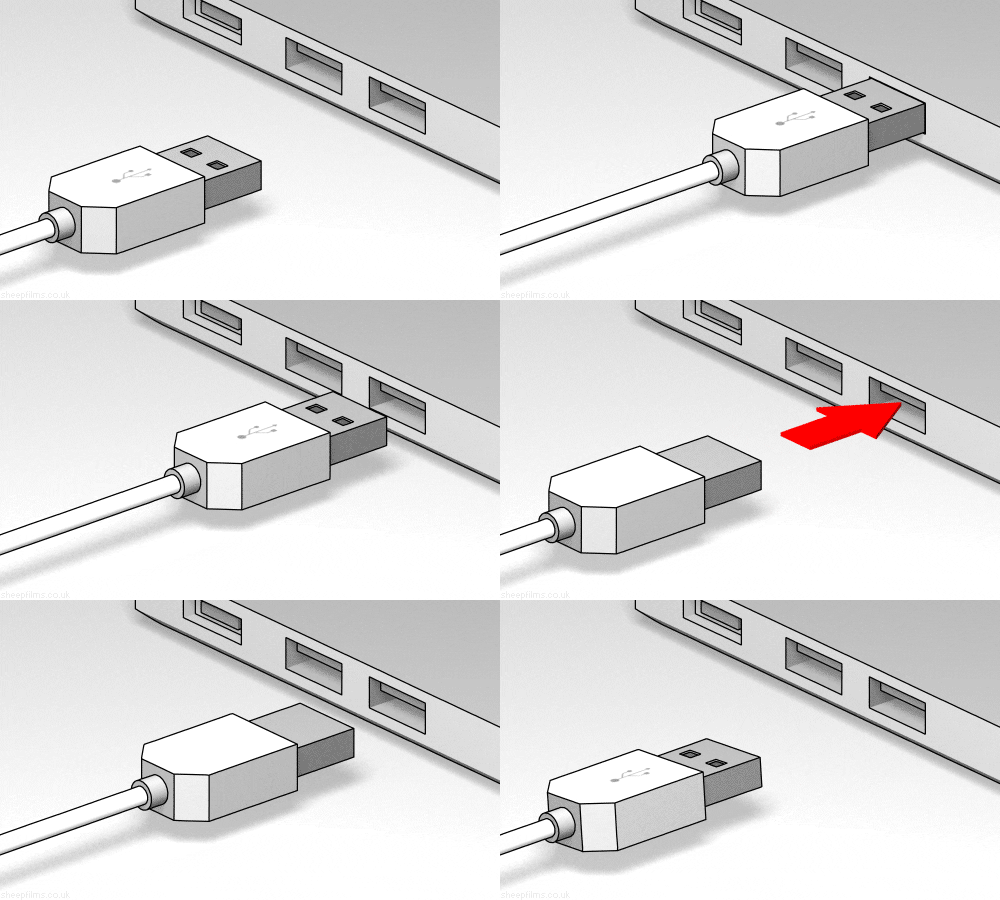
One of the folks involved in the original USB standards work once told me that the lack of reversibility (or at least a more obvious indicator of orientation) was the main thing they got wrong with the initial standard.
The other one was making it the same width as an 8P8C modular jack. The number of times I've put a USB-A connector in the Ethernet jack when reaching blindly behind my computer...
The port itself is nice, is in the cube of data rate, power rate, port type that is the problem.
You can have A ports that deliver 20V and 3.1 data rates, and C ports that deliver only 5V and 2.0 data rates, and they are both valid according to spec.
Very few connectors are (look) symmetric but can't be plugged in both directions. It is actually a very big oversight by the design committee because, sadly, most of us are not as sharp as you.
Don't think of it as "designed for idiots", think of it as "reaching for the cable in the dark and trying to get your phone on the charger in the last few moments of consciousness before you fall asleep" and you'll have a better idea of why it's reversible.


- USB-C is a connector and not all ports/cables/hubs support all of its features and modes. So not everything that can be connected using a USB-C will work the same way, or even at all.
- Due to their potential bandwidth demands, computers can’t have very many USB-C ports
- USB-C will be phased out and replaced before settling down