Seems like the initial deployment of the microLED's into a smartwatch makes some sense.. But unclear how this would make any sense for a large size phone display. The sheer quantity of LED's that must be placed properly on a glass substrate would be quite high.
However, the promise of microLED is pretty impressive if the manufacturing can be pulled off.
Basic idea is small high performance LED's of Red, Green, Blue, that are of the inorganic variety -- so much higher performance than OLED. They can be larger fill factor since they are diced from a wafer and can be basically any size -- vs. OLED where each color is limited in size due to the manufacturing process -- basically due to the size of pin-holes put in a mask that hovers above the substrate surface (called a fine metal mask).
The power, brightness, lifetime, and stability all likely would be quite high with the inorganic microLED's.. However, the cost is the challenge for sure. Its essentially equivalent to buying a bare wafer with millions of red, blue, and green LED's -- per each display. So say you want a 4kx2k display, well, that is 8 million LED's. If each one costs say $0.001 (a tenth of a cent), well, you have 3 * 8000 USD, so $24,000... so... clearly they need the LED's to be really, really, really, cheap -- say 10,000 per dollar.. which in the world of LED's would be super crazy crazy crazy cheap.
LG OLED is not true color OLED, but a hack, having a white OLED emitting panel and a color filter on top. It has many downsides like lower efficiency, maximum brightness and color accuracy.
>Seems like the initial deployment of the microLED's into a smartwatch makes some sense.. But unclear how this would make any sense for a large size phone display. The sheer quantity of LED's that must be placed properly on a glass substrate would be quite high.
How would it be different than producing screens for e.g. 10 watches (or what the analogous real estate is)?
Every pixel on the panel must work, otherwise the whole panel is useless. Now imagine you have one broken pixel on average for every million pixels. Apple Watch screens have 100k pixels so on average 9 out of 10 screens test OK and can be used to make a watch. But the iPhone has about a million pixels, so you end up throwing away about half of all the screens you make.
This assumes each failure is independent. Often a single failure will cause many bad pixels on the same screen. So you might have 98 good screens 1 with one bad pixel and one with 5,000 bad pixels when the per pixel odds say you are going to end up with 1 good screen if you are lucky and 99 bad ones.
I simulated 100 screens with different numbers of pixels where the probability the first pixel is bad in a screen is p0 = 1e-6 and the presence of each bad pixel increases the probability of the next one by the same amount (ie probability for a second bad pixel is 2e-6 and for last pixel is p0*number_already_bad_px). A screen was accepted if it had 0 bad pixels. The results look pretty much the same:
Of course this was just a convenient scheme to simulate. The greatest number of bad pixels was 86k for the 10 million px screen (so chance the last pixel was bad was ~9%). It does show that the independent pixel model isn't necessarily very far off though.
You messed up the math. You need to count (# number of pixels that where bad) / (total number of pixels produced) not simply call the odds for the first bad pixels as the rate of bad pixels.
You are saying to adjust p0 so I get that the frequency of bad pixels = 1e-6? That makes sense but it would probably now depend on what size screens are being considered... not sure if I'll go back to it.
I guess it would be about the ratio of the price for the screen compared to the device.
Smartwatch at 600$ with a small screen vs. a smartphone at 1000$ but with a 10x bigger screen. With 10 smartwatches I would have 6000$ to spread the additional cost over.
Assuming the same (as current) prices for iPhone and smartwatch, that would be the same ratio though if we divided by the current models, so it doesn't tell us much regarding how might the new kind of screens affect price.
Only something that took into account the relative cost of each type of screen would (and, if screen area is a non 1x linear factor of cost, that too).
lol these things aren't going to be priced per LED. Just like you don't pay per transistor when you buy a chip, you're not going to pay per diode when you buy a microLED display.
The costs scale with device area, not device count. This is because these devices are made with lithography on a wafer. A single silicon wafer would produce 5000 diodes, or it may produce 5,000,000, depending on how small you make each one.
It depends on whether the display is assembled with a monolithic microLED wafer or a microLED transfer process. I believe Luxvue which Apple acquired was focused on the latter. Transfer cost and rework cost do scale per LED. Additionally, defect rate most likely does scale per LED to some extent in addition to per area.
There are probably manufacturing processes where LED transfer costs don't scale per LED. For example, they could use some type of expanding substrate material as part of their transfer process.
Of course, so let’s assume a 5” display, and assume that the fill factor per LED color is 25% (rather than expected 33%) then 25% of the area of a 5” display would be required to populate one color. So assuming a small dicing kerf let’s assume for a 12 inch wafer you get 8 displays from that for one color. Which feels pretty generous, normally that same vendor would have yielded millions of LEDs from that same wafer and they made say 10000 per wafer, then if you asked them to sell for far less than that, what is their incentive? If they did that they would essentially be crashing the entire LED market in one fell swoop and their own profits. So the die area argument makes sense from apples perspective but doesn’t from the entrenched LED makers perspective. So seems like apple essentially would need to own the actual LED fab as well.
interesting point but for a given luminance in nits the area doesn’t matter since it is cd / m^2 so assuming that there is a “cheap variety” of LED wafer material that outputs say 2000 nits for a low current, then a small area — say 20x20um for the subpixel size would save some cost for sure. I would estimate about the area of the subpixel would be about 30 times smaller than most indicator type low cost LEDs — which are in the sub 1mm^2 area range. So we can find the 30X factor but still need around 300X cost reduction still to get a 10000X reduction in price. Ultimately the Display should be around $100 or less, so if you can buy an entire wafer for $800 or so then you have something, but as far as I know most 12 in wafers with zero processing done to them are more like 1k. Then put them thru a fab and add value and run the fab and the cost goes up a ton. And we need 3 different wafers.. so anyway, I’m worried cost is just going to really hurt this approach for a long time.
Producing the same luminance using a smaller LED is equivalent to running the same current through a thinner wire. At some point you're just going to be burning out the LEDs instead of powering them.
Given that you respond to that problem by lowering the current to within the smaller LEDs' reduced tolerance, then you get something too dim to use as an indicator LED.
Great job describing some of the real advantages and manufactuting challenges of microLED displays. The 320x320 pixel wearble displays seem like a place to start with only 100k pixels (300k sub-pix). With that number of pixels they'll be able to have decent yield at 1ppm defect rates. The power, brightness, and lifetime arguments are even more compelling for a watch.
I don't think the cost side is so bad. LED wafers are only a few hundred $ at 8in for over 3M 50x50um2 die so ignoring other processing and placement costs they are in the right ballpark. Assuming they use some PWM or passive matrix method that keeps the power control substrate cost/yield reasonable they could have a very high performance square inch sized display for a reasonable price... soon?
For any larger displays the dicing and KGD placement yield become a huge issue. Ultra-reliable reworm and/or uncorrelated defects become critical when you need to approach 10ppb for reasonable yield at WQ.
Yea for the big TV's I think its basically like pick and place for the LED's.. the TV is essentially a giant PCB covered in around a million or so LED's.. which is pretty ridiculous that they tried that, but pretty awesome anyway..
The unattributed quotes in the story say a lot. Apple employees with that level of information don't have casual, off the cuff, and not-for-attribution conversations with Journalists by mistake or by accident.
I suspect this was a purposeful and controlled leak.
To what end? A shot across the bows of screen manufacturers? I suppose that's possible, to try and force screen manufacturers (i.e. Samsung) to cooperate on production costs for existing screens. But that doesn't seem like a useful negotiating tactic to me and it would probably be more useful to keep this secret until scale manufacturing deals have been signed and work has started.
It seems that having this kind of information out there would be of benefit to Apple in negotiations with screen manufacturers eg. it could make suppliers more willing to sign a long-term deal at lower rates than they might otherwise, due to the fear of being dumped in the future.
Another potential purpose for such a leak would be to boost the stock price.
A better negotiation position would have been my first guess, too.
> The screens are far more difficult to produce than OLED displays, and the company almost killed the project a year or so ago [...] consumers will probably have to wait a few years before seeing the results.
So the best-case scenario is that Apple finishes developing this technology in a few years, and the worst-case scenario is that they kill this development, which almost happened already.
This could go either way both for Apple and for screen manufacturers. It only makes sense to explore an option without all this uncertainty, by seeking a new middle ground.
Apple has frequently used exclusive advanced screen technology as a differentiating factor in their products. Retina displays, better colour fidelity, wide colour gamut, 5K, etc. Previously they have done so by working together with screen manufacturers and underwriting the development of such technologies, the tool chains and manufacturing buildout with massive (Bns of dollar) loans, but actually owning the patents, tool chain and manufacturing gives them even more control and exclusivity.
To me it depends. You might not actually want to produce your own screens, or what ever else you currently buy instead of making it yourself. Because that would require dedicated resources, diverted from your core competencies. But you might have someone, or a small team, look into it. Work out what you might need to do, what it is going to cost. Then you take that research and knock on your suppliers door and ask for a better price.
I'm not saying that is what is happening here, but it could be a viable negotiation strategy.
Samsung stock did take a hit as a result of this. Another possibility is a fabricated leak for a pump and dump style scheme.
Seems indeed very little interest for Apple. I'm sure any effect of a public leak can be as efficiently done with regular phone call. By shear size, Apple is very close to all its providers, the "pride and prejudice" drama is creative license of the media to animate what is mostly regular boring corporate interactions.
I don't know whether this is a purposeful leak or not but there are several reasons Apple may want to. Besides the ones others have mentioned a few other are:
1) Part of being an Apple fan is the steady stream of rumors that keep people excited. Even if they don't pan out. So keeping the fan base interested.
2) Apple, unlike its competitors does not reveal its research unless it has a product to sell. This often leads to accusations of being less innovative than others. This helps maintajn the impression that they are an innovative company the way releasing proof of concepts or innovative, yet unsuccessful, products work for its competitors.
3) This may lead competitors into wild goose chase a especially if Apple has determined that it's a technology that isn't going anywhere
4) It may prod suppliers into investing in researching such technologies. If they know that Apple is interested in a technology, it gives every screen manufacturer a huge incentive to put a lot of money into research that may lead to a product that Apple could just buy. (To be fair, it wiuld probably be easier to just tell the suppliers that they are interested in this).
I don't buy any of that. The population of Apple customers that hang on leaks like this is relatively tiny and if they're that much of a fan they're hooked anyway. Minor leaks are going to happen whatever Apple does, so manufacturing them just isn't worthwhile.
Then there's the problem that it's impossible to control the narrative on off the record leaks, and once you leak a supposedly 'desirable' amount of information on a secret project, that's like blood in the water to the media sharks that will then savage the subject to death trying to get 'undesirable' amounts of information on it. The risks from that IMHO would massively outweigh the minuscule and highly arguable benefits from a minor leak. Small leaks have a tendency to turn into big leaks and Apple definitely doesn't want that to happen.
Then there is Ming-Chi Kuo who has excellent sources inside Apple's supply chain.
The difference being that Gurman hears about things that Apple is working on, while Ming-Chi would be more likely to know about which of those things are going to be built at scale.
I suspect this is the case here as well. Mark has never been quite accurate when it comes to hardware leaks, compared to Ming. My guess is all these are intentional from Apple, for a few reasons.
OLED is expensive. I think Apple has learned its lesson with NAND, ( Where its projected NAND and SSD market cost does not align with reality ), Sharp does not yet have an OLED that is competitive, they are focusing on a different type of OLED technology that is much cheaper to manufacture, Ink Jet Print style OLED, one of the original promise of OLED was being even cheaper then LCD. But its quality is not on par with Samsung. Credit where Credit's due Samsung make amazing progress with AMOLED technology, if you think in the few years time what they have manage to achieve is uncanny. S9 now has the best possible display compared to even professional monitors. The only possible improvement left are brightness, power, price and longevity. Apart from Price, the other three will likely see improvement in Note 9, and more so in next iPhone. Samsung has been able to improve its OLED technology with every iteration twice or somecase three times every year.
Apple is paying up to $100 a pc to Samsung for every OLED display. And if you include NAND & DRAM, which is extremely profitable in the last 2 years that is why people joke Samsung make more money selling components to Apple then selling its phone. While not entirely correct it is certainly not baseless. One reason why Apple will never move back to Samsung Fabs is to avoid putting too much egg in one basket. Despite the consistent rumours, which I guess is another play for TSMC to lower their price.
Apple has literally NO other choice in OLED the market. As much as LG and BOE wants the business from Apple, both do not (yet) have the technology and capacity to output something similar to Samsung. Certainly not in this year's iPhone. I once written off BOE being far too early in the game, but it turns out BOE isn't far off, and are making much better progress. Compared to LG which I have no idea what they are doing in terms of Mobile Display. They seems to have difficulty getting it right, meanwhile their own WOLED display are much better. That is why I think the rumoured Apple investment in LG Display plant might have more to do with bigger WOLED screens then Smart Display.
I think the larger 6.x" iPhone X Plus is pretty much guarantee this year. That display panel is going to be even more expensive.
My problem with MicroLED is that it is still very much a fantasy, at least in terms of high PPI, mobile display panels. The MicroLED shown by Samsung "Wall" and Sony are completely different thing. When people talk about Mass-Transfer being the biggest obstacle, I have yet to see a single 600ppi+ MicroLED display that have said to solve their ultra low power passing through each and every pixel, being energy efficient as advertise, and brighter then LCD. ( Do Correct me If I am wrong ) Once they solve that, or at least being good enough to compared to OLED, they will have to solve Mass-transfer as well. Or using possibly other innovative method to mass manufacture.
I wrote in 2015 MicroLED isn't going to happen as rumoured at the time for 2017, I wrote even 2018 is a bit of stretch given the best case scenario possible, and now as we stand my guess is that even 2020 seems unlikely. ( And I got Attacked by Apple Fans every time i said that, no wonder why some groups of people hate Apple's cult so much )
The good news is Apple is back on track again spending big in R&D. [1] So I hope I am wrong this time around.
When they talked about the upcoming "modular" MacPro [1], Apple confirmed they will again sell a desktop display. I feel certain it will be at least 5k, and more likely 8k, and I've been wondering if they will make their own from the ground up like this article suggests for the smaller screens.
An idea I've had in the past is that surely there's a way to detect eye direction as looking at the screen and tweak the image on-the-fly so the eyes are looking directly at the camera instead.
The idea is so simple I'm assuming it's not as easy as it sounds, so I've never really tried it (plus I have close to 0 experience with machine learning algorithms)...
It was work done at Microsoft Research (https://www.microsoft.com/en-us/research/wp-content/uploads/...), but I don't think it was ever integrated into any products. Given our sensitivity to faces and eyes, I expect the result would be quite uncanny. Better to just side-step the problem by rendering sunglasses over the user's eyes.
Apple made 48 billion in profit on 229 billion in revenue in 2017. Granted, while Apple is the top smartphone seller and not all of their revenue/profit comes from the iphone, an Amazon bet that only loses 200 million this late in the game shows how much they underestimated the smartphone competition.
As phone companies are in an arms race to remove phone bezels, which would be motivation to make selfie cameras "behind" the screen or something of the sort, this might happen sooner than we think.
With current processing power it is possible to use either multiple cameras, or the X's face id sensors to manipulate the image to project the 2D live feed onto the 3D model of your face and slightly shift the 3D scene to make the image seem like it's making eye contact. I'm honestly surprised none of Google, Microsoft or Apple have this in their VC products yet.
Optically this is a problem, it would have to be some kind of "compound eye" system like an insect rather than a traditional set of apertures and lenses.
You'd also have problems with light bleeding from the display output into the camera.
Apple has the money to build everything thmeselves. And something like screens that can give competitive advantage they are likely to produce themselves
From my point of view, they did it to port the Mirasol technology to watches. It just makes sense that they want to have watches with battery that last at least a week or so without charging.
Mirasol is just so great with color and outside light. But it requires an entire wafer per screen. It is an expensive process, but Apple has so much money it is nothing to them to jumpstart production.
If they do it, they will have a product that has no competitors at all, at least until those patents last.
I don't think this is very surprising for apple. The current screens are made by competitors (LG & Samsung), the screen is the main interface for most of Apple products, and Apple likes to have end-to-end control over their hardware.
They're going to want to do custom design without the catching the attention of their competitors, or working directly with them.
I think Apple's strategy with the iPhone is (or should be if it isn't already) to leverage their enormous war funds to build unique competitive advantages.
They used to do this with software. That's why we have OSX and iOS. They've expanded that to hardware already. The AX Processors, other smaller chips, camera. The screen is a natural extension of this idea.
Retina displays are already not the best in class and haven't been for some time. So yes, there's a lot more progress to be made and has been made by others :)
I think you're confusing end-to-end control with end-to-end construction.
They don't care if they are the ones putting the screw in the whole, they want to know that they are the ones making the screw. It may seem like a small difference, but it is an important distinction.
it is not only about making thinner devices just for the sake. It is also about making energy efficient devices. Current battery tech has not progressed leaps and bounds so I think Apple is trying other ways to make Apple products more energy efficient.
Tim did say they want to control all essential tech for their products. As you can see how they have integrated iPad Pros screen with new controllers and pens to make the Pen work, they probably want absolute control on every parameter without any issues and secret leaks
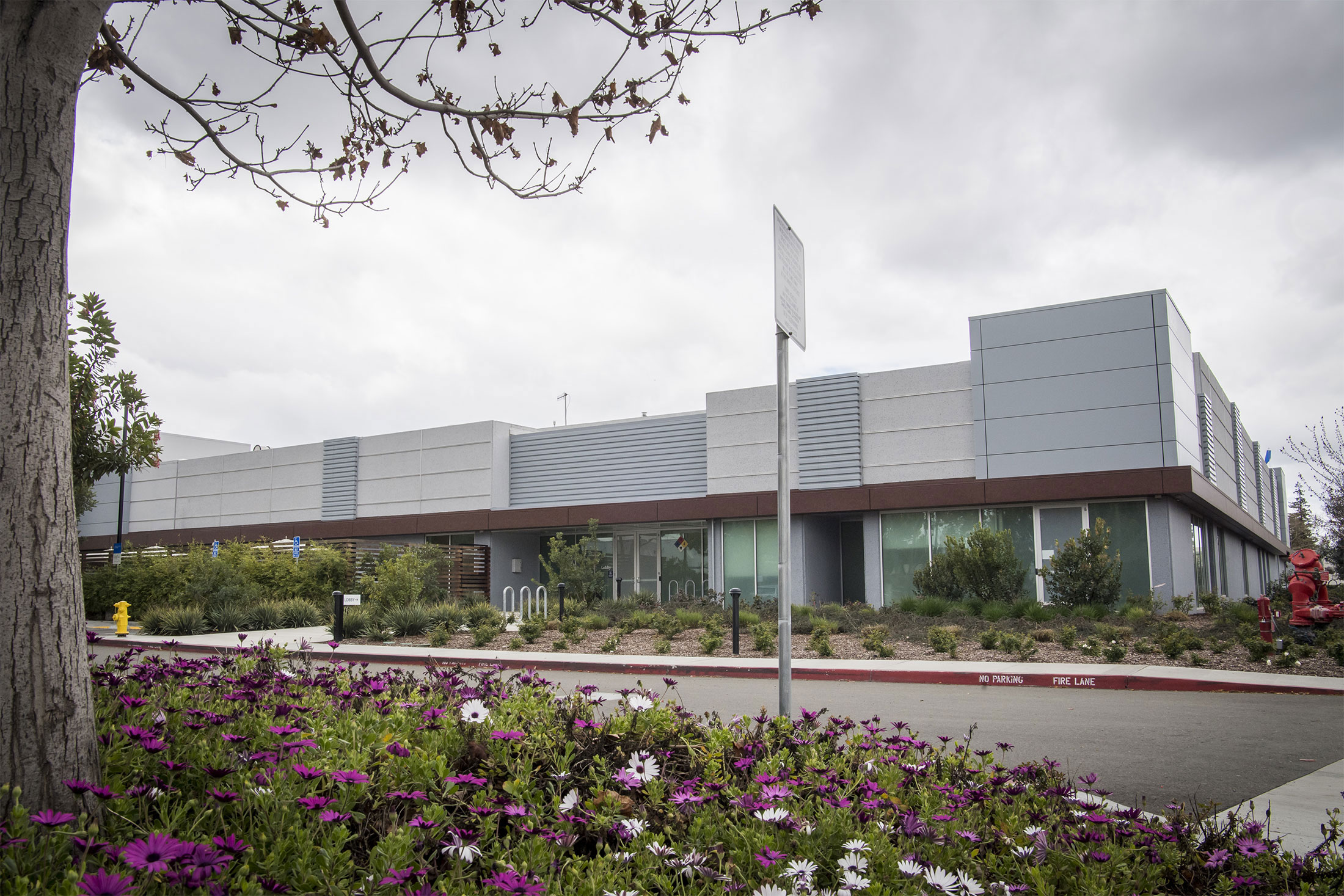
Perhaps not quite exactly on topic, but the multicolored red-yellow-white-blue diamond to the right of the front entrance caught my eye. It can be seen in here:
I didn't know the iPhone X is the first Apple device with OLED tech. I thought it was using OLED for a while. Does that explain the fantastic battery usage on iPhone X or is that due to the double battery pack?
I'm glad to hear that big companies other than Samsung are in the running to develop MicroLED displays. MicroLED promises a huge improvement over all other emmissive display technologies in terms of quality and capabilities, if manufacturing can be figured out.
Micro LED displays will be an incredible advancement if it comes to fruition. They potentially have the capability to display the full Rec 2020 color gamut.
Things will look indistinguishable from real life.
Except they'll be emitting light which rarely happens in nature. I'd rather see transreflective screens which only use a backlight if it is needed. Most of the time, ambient light is sufficient for the display.


However, the promise of microLED is pretty impressive if the manufacturing can be pulled off.
Basic idea is small high performance LED's of Red, Green, Blue, that are of the inorganic variety -- so much higher performance than OLED. They can be larger fill factor since they are diced from a wafer and can be basically any size -- vs. OLED where each color is limited in size due to the manufacturing process -- basically due to the size of pin-holes put in a mask that hovers above the substrate surface (called a fine metal mask).
The power, brightness, lifetime, and stability all likely would be quite high with the inorganic microLED's.. However, the cost is the challenge for sure. Its essentially equivalent to buying a bare wafer with millions of red, blue, and green LED's -- per each display. So say you want a 4kx2k display, well, that is 8 million LED's. If each one costs say $0.001 (a tenth of a cent), well, you have 3 * 8000 USD, so $24,000... so... clearly they need the LED's to be really, really, really, cheap -- say 10,000 per dollar.. which in the world of LED's would be super crazy crazy crazy cheap.